by LFIAdmin | Jan 3, 2024 | Uncategorized
By Ritabh Singh, Final Year student at the Government Law College, Mumbai
ritabhsingh44@gmail.com | Jan 03, 2024
INTRODUCTION
A trademark can simply be understood as a word, letter, shape of an object etc. which denotes a certain enterprise and which distinguishes it from other entities. To provide an example, the MNC Apple Inc. has trademarked the word “Apple” and the logo of a bitten apple [1](in its class of goods and services) which distinguishes it from its competitors. A trademark is an intellectual property, meaning it has been creatively invented to be used specifically by its inventor unless he sells the rights therein to a third party.
Trademarks have served an important function not only for companies but also for general consumers. It facilitates the creation of an association between the provided goods or services by the company and the general consumers. This association then furthers the value and reputation of the company.
Having a registered trademark also protects the created brand as it disallows other entities to use the trademark. Thus, once a trademark is registered with the relevant authority, other companies cannot use the trademark. To continue with the above-provided example, other companies, especially competitors, cannot use the trademark “Apple” for their activities, thereby protecting the value created by Apple.
STATUTORY DEFINITION
The Trade Marks Act of 1999 governs the law relating to trademarks in India. The following are the relevant definitions –
1. Section 2(m) : “mark” includes a device, brand, heading, label, ticket, name, signature, word, letter, numeral, shape of goods, packaging or combination of colours or any combination thereof;
2. Section 2(za) : “trade mark” means a mark capable of being represented graphically and which is capable of distinguishing the goods or services of one person from those of others and may include the shape of goods, their packaging and combination of colours;
A trademark is infringed when an entity, not being the registered proprietor or a person using by way of permitted use, uses in the course of trade, a mark which is identical with, or deceptively similar to, the trade mark in relation to goods or services in respect of which the trade mark is registered and in such manner as to render the use of the mark likely to be taken as being used as a trade mark [2].
TYPES OF TRADEMARKS
Trademarks can be generic, suggestive, fancy, arbitrary and descriptive. Generic and descriptive trademarks are difficult to register as they are of a general nature and have no distinct or secondary meaning. They simply describe the product or service provided by the company and use extremely common words as their mark. In contrast, fancy and arbitrary trademarks are registered much more easily and the use of them by other entities does not usually stand in court. Such trademarks are already unique as they may be invented words or may have no connection with the product or service at all or may also suggest a relation with the product or service, but do not describe it [3].
Generic and descriptive words are usually not registered as trademarks. However, some trademarks, even though being of a generic character, tend to develop a unique character in the psychology of general consumers and these consumers start associating that generic trademark with one entity only. The courts take into account certain elements while deciding if a particular generic trademark has attained a distinct meaning [4].
FACTORS MAKING A GENERIC TRADEMARK UNIQUE
It is well misunderstood that a generic word may never acquire distinctiveness and therefore may never be registered. This misconception has been answered by various courts in various judgements. The courts have held that where it is argued that a generic word has acquired distinctiveness, the burden of proof lies on the user of such mark to prove its distinct character.
The most important factor which makes a generic trademark unique is when a consumer having reasonable prudence develops a secondary meaning for the generic word and deeply associates it with the product or service rendered by the company. Only when a generic trademark acquires a distinct identity can it become a unique trademark [5]. A commonly used word can become uncommon in the eyes of the consumers, after which protection by the way of a registered trademark is awarded to the user.
The following are arguments in favour of proving a generic word has attained distinctiveness –
1. Huge market & investments in promotion [6] – If it is shown that a generic trademark is being used to describe a product or service rendered by a company having a huge consumer base and a substantial amount of money has been spent in the promotion of the trademark, it can be argued that the generic word being used to describe the product and service has acquired uniqueness due to the vast number of consumers of the same. The goodwill and reputation enjoyed by the company play a crucial role in the propoundment of this argument.
2. Addition of a unique prefix or suffix [7] – When a unique word is used as a prefix or suffix to a generic trademark, the entire trademark may acquire uniqueness and acquire a distinct identity. Such addition mixes the general word with unique words, thereby making the created word distinct. The interplay of words may result in trademark distinctiveness.
3. Long and exclusive use – When a generic trademark has been exclusively used for a long time, it can be argued to have created a unique identity in the eyes of the generic public. The general public, due to the long and exclusive use of a generic word by a company, has started associating that word only with such a company thereby granting it uniqueness.
4. No competition – If, in a particular class, a company does not have any competition and is the only provider of a good or service, the company may use a generic word as its trademark. The same logic can apply where the goods and services provided by different companies are substantially different and the mark is registered under different classes.
5. Not visually, phonetically or deceptively similar to any other mark [8]- Where a generic word is not visually, phonetically or deceptively similar in any manner to any other registered trademark, it can be argued that the word itself has developed a unique character and begs protection.
The convincing point for the court is that the generic and common word is no longer generic or common and cannot cause any confusion in the eyes of any man with reasonable prudence. Such a word has developed its own uniqueness and is well associated with the company by general consumers [9].
CONCLUSION
It will finally be the decision of the court to decide if a generic word has attained distinctiveness. The court carefully examines the facts and circumstances of each case and then decides the case on merits. In particular, the courts are careful about not creating a monopoly in favour of the user which then directly affects competition. The court also checks if the word can cause confusion in the minds of the general public. Lastly, courts may also issue stringent conditions in the use of a generic word as a registered trademark for its appropriate use and for ensuring healthy competition.
Endnotes
[1] https://www.apple.com/in/
[2] Ref to relevant provisions of the Trade Marks Act, 1999, specifically sec 29.
[3] M/S Matrimony.Com Limited v. Kalyan Jewellers India Ltd. 13th March 2020
[4] Hatsun Agro Product Ltd. v. Arokya Food Products (2016)
[5] Info Edge (India) Pvt Ltd vs. Shailesh Gupta 98 (2002) DLT 499
[6] DFL Limited v. Sohum Shoppe Limited (2015)
[7] Prem Ratan Rathi vs. Ashish Iron Trading Co (2013)
[8] Amritdhara Pharmacy vs. Satya Deo Gupta (1963)
[9] Lazmikant V. Patel vs. Chetanbhai Shah (2002)
by LFIAdmin | Dec 23, 2023 | Uncategorized
DHRUTI KAPADIA, DOCTORATE STUDENT AND MEDIATOR
23rd Dec, 2023
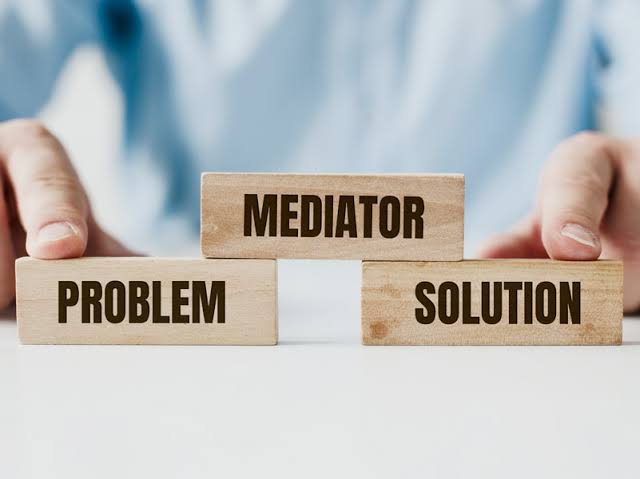
Conflicts often take place across the globe. There are often deep marks left behind from which we see history repeat itself, and we see conflicts occurring frequently. With this, we can see how mediation plays a vital role as one of the mechanisms under the wheel of Alternate Dispute Resolution for resolving disputes. There are different fractions of conflict and conflict occurs at every level of life. It’s not only limited to individuals, but also organizations and has truly captured the world.
The stakeholders often find it challenging to apologize, say it at the workplace, or say it in their own house where spouses fight or parents fight with their children. When it comes to apologizing, there is the self-realization of self-improvisation, and it becomes a leg back option for most of the stakeholders due to which it leads to solid ego issues and many a times the relationships bitter up.
Only if, culturally, we adapt to admit mistakes and to let go of the past and move forward, we find resolution and peace. This process will heal the stakeholders, not only mentally but also emotionally, under which the overall personality of the stakeholders can change to be better human beings. Therefore, when it comes to the strategy of resolving disputes, the smooth process of accepting the wrong and curing it would come forward, and there would be better opportunities for the stakeholders in the global world to progress.
Also, if conflict management together is taught in school, where children start understanding how to handle their conflicts and to come to amicable solutions with their classmates or with their parents or their teachers, they will grow up to be better human beings with the vision to take care of a situation in the global world. They will develop the ability of resolving disputes which would bring effective solutions in a fast track mode and build good relationships not only with conflicting individuals but also with the public at large who would then consider them equipped enough to come up with innovative solutions which can bring a win-win situation for everyone around them.
The same generation holding out to be the nation’s future will always see themselves as good mediators if they are taught to resolve conflicts, from the very inception of their school days, which often is missed out. Hence, a progressive nation must visualize and ensure mediation requires no learning age. Still, it is essential to teach every individual how to actually mediate and also participate in peace-making agreements at all stages in life and to know the positive approaches on how to resolve their conflicts. Therefore, the mindset of our nation’s future should be cultivated in a positive approach way so that as they grow up as individuals, they will know how to negotiate, how to act and react with their society and also how to gain benefits by using strategic thinking instead dealing with life in a destructive manner.
Therefore, the training on how to mediate would be essential if one starts realizing that mediation is social healing; if one has entered into a conflict or has a big community of disputes, which could be emotionally draining, it could cause commercial loss and have a negative impact on society.
There are situations where mediation cannot be resorted to and the disputes are so intense that litigation is the only process and option for the parties to get justice. In such a situation, if an opportunity comes up to understand that there will be significant loss for long years and the parties will drain themselves, then with proper advisors and systemic strategies, there can be applied a strategy at some stage to introduce mediation which can open doors to an amicable solution.
There have been instances of family disputes, property disputes and commercial disputes which have built good, progressive and peaceful ways of dispute resolution by coming to a conclusive settlement through mediation, which can be enforceable by law. The prolonged battles of arguments have closed with amicable solutions, and not only that, with such excellent solutions that result in the stakeholder’s relationships being improved. This shows that mediation is the way for the parties to heal themselves socially and which allows them to rebuild the relationships damaged due to the conflict.
Many people do not seriously indulge in the process of mediation and also abuse the process to delay litigation. However, if the stakeholders genuinely want to resolve their dispute, mediation is the best method of Alternate Dispute Resolution as it will help them achieve commercial benefits, emotional benefits and mental peace as it will save time, money and energy. The experience of re-building relationships can crop out positively for future perspectives as well.
This social healing can help society stay connected. Also, whenever and wherever there is a war, there is always a possibility that conflict management is taken care of and peace is brought through the mediation process. Moreover, the intervention of peace-making bodies such as the United Nations can be helpful.
“World peace must develop from inner peace. Peace is not just the mere absence of violence. Peace is, I think, the manifestation of human compassion.” ― Dalai Lama XIV.
The peace building process truly starts when one starts realizing that violence is not the solution to anything, as destructive modes can only destroy human lives. There have been many wars due to conflicts related to resources, and to date, the impact of those wars remain. It is not only the entire nations’ conflict with global competition, but also individual conflicts, that need to be taken care of to achieve the ultimate solution of peace. It is imperative to realize that mediation plays a vital role in social healing of stakeholders and has the capability to achieve universal peace and abstinence from wars.
by LFIAdmin | Dec 14, 2023 | Home
By Nazaqat Lal, Advocate & Solicitor, Bombay High Court
nazaqat_lal@hotmail.com | Dec 14, 2023
a. What is real estate due diligence?
Real estate due diligence is an investigative process undertaken to ascertain the title of the seller to the land, buildings/structures, flats, etc. and assess the risks involved in acquisition of such property.
The real estate diligence may involve due diligence of the land, land and structure thereon or a part of the structure such as a flat. The land maybe agricultural or non agricultural, it maybe freehold or leasehold.
The nuances vary from land to land and structure to structure but broadly speaking, a real estate diligence would ordinarily entail examining revenue records (in the case of agricultural land), a search at the office of the Sub-Registrar within whose jurisdiction the property is situated, issuing public notices, vetting title and property related documents available with the seller, vetting certain documents and permissions in respect of the land and building, inspection of original documents and a litigation search.
b. Why is real estate due diligence done?
One, there is a legal requirement and legal obligation on the purchaser to undertake due diligence.
Two, it is done to ascertain whether there are any risks attached to the acquisition of the property and any likely hindrances and/or disputes likely to arise on or after the acquisition.
Three, it is also done to serve as a mitigating factor should the property subsequently become the subject matter of a dispute/litigation. If the buyer has carefully undertaken due diligence prior to purchasing the property, courts will factor this in at the time of deciding the dispute.
A buyer who has undertaken sufficient due diligence is far better positioned to protect his rights in the property and/or be sufficiently compensated than a buyer who has not undertaken sufficient due diligence, despite them both having made full payment of consideration towards their respective properties.
To put it very simply, when a person is looking to acquire a property, he/she wants to be able to enjoy such property and be in quiet and peaceful possession of such property without claims from third parties. Real estate due diligence is done to ensure this.
Whether property is being acquired for self use or by way of investment, a substantial sum of money is involved and very often, a lifetime of savings and hard earned money. Not everyone is able to purchase multiple properties.
Therefore, it becomes even more necessary to ensure that the sole property being acquired has clear title or potential for the title to be clear prior to acquisition.
There are also situations where the buyer is already aware that the property is in dispute or carries certain risks with it. In such a situation, real estate due diligence may still be undertaken to ascertain the magnitude of the risk, ways in which such risk maybe mitigated and necessary safeguards suggested to be built into the documentation for the benefit of the purchaser.
c. Legal principles underlying real estate due diligence
‘Caveat emptor’ which means buyer beware is a fundamental principle underlying due diligence. A buyer is required under law to be vigilant and take all necessary reasonable steps prior to acquiring property.
Another fundamental legal principle underlying due diligence is that a transferor cannot pass a better title than he himself possesses. Therefore, due diligence is undertaken to ascertain what title the seller has and what risks, if any, are attached to the same.
d. What are some of the concerns that get highlighted in a real estate due diligence that could otherwise potentially go unnoticed?
Every land, structure or part of such structure has its own nuances. However, some common concerns that often get highlighted include rights of third parties (including banks/financial institutions), restrictive transfer covenants in the title documents, interest of minors in the property, not all legal heirs being party to certain documents, payment of consideration to some legal heirs to the exclusion of others, nominee holding the property on behalf of all the legal heirs and representatives of the deceased, insufficiently stamped documents, irregularly executed documents, unregistered documents where registration is mandatory, property being sold below ready reckoner value, rate of TDS, whether the seller is resident in India, an NRI or a foreign citizen, seller’s pending liability of direct and indirect taxes, building permissions with respect to OC, height restrictions, FSI, etc., restrictions on the use of the land and its transferability, ongoing litigations with respect to the property, outstanding payments pertaining to the property that may result in a charge on the property, etc.
e. Is real estate due diligence foolproof?
No. While the accuracy of the due diligence depends significantly on the reasonable care taken by the lawyers involved, it is still not foolproof. Real estate due diligence relies significantly on searches taken at various government offices such as the Sub-Registrar’s Office, Talathi’s office, etc. Records of older years may not always be properly maintained or easily accessible. While attempts are ongoing to digitize several documents and records, the digitization process has its own drawbacks. As a result, despite undertaking searches, all relevant documents may not necessarily show up in the search. A litigation search is also usually undertaken as a part of the real estate due diligence process. Again, while a high level of accuracy can be achieved, it is difficult to achieve foolproof results considering the number of dispute resolution fora and courts in which a dispute could have been filed with respect to such property.
Real estate due diligence also proceeds on several assumptions such as the genuineness of signatures on documents, documents continuing to be valid, subsisting and in force, documents being validly executed, sufficiently stamped and duly registered, all necessary permissions and approvals being obtained and continuing to be valid and subsisting, execution of documents being duly authorized, etc.
While the process is not foolproof and there is room for error for the reasons set out above, reasonable care taken by lawyers, search clerks and all those involved in the process of collating the title and other property related couments can to a great extent minimize the room for error.
f. What is the consequence of acquiring property without doing due diligence?
As set out above, in a dispute situation, a buyer who has undertaken sufficient due diligence is far better positioned to protect his rights in the property and/or be sufficiently compensated than a buyer who has not undertaken sufficient due diligence, despite them both having made full payment of consideration towards their respective properties.
By not undertaking due diligence, a buyer exposes himself/herself to several risks that have not been accounted for and which the buyer may find difficult to deal with when such risks attaching to the property arise.
To put it simply, acquiring property without doing due diligence is going in blind and leaving it entirely to destiny and chance that no major issues arise.
by LFIAdmin | Nov 28, 2023 | Home
By Nazaqat Lal, Advocate & Solicitor, Bombay High Court
nazaqat_lal@hotmail.com | November 28, 2023
• My broker has given me a draft agreement that is commonly used for sale/purchase of flats. My broker will also arrange to pay TDS. Why should I engage a lawyer and pay legal fees?
• The seller is known to me and has assured me that there is nothing to worry about. Is due diligence necessary?
• While purchasing an apartment in a new project, there is little or no scope for negotiation with the developer. Why should I engage a lawyer and pay legal fees?
• A bank loan was taken at the time of purchase of the house. The bank would have done its due diligence before issuing the loan. Do I need to undertake due diligence if I am purchasing the flat?
• I am selling my flat. I am only concerned with receiving the consideration. Why should I engage a lawyer?
• No one actually responds to public notices. Can we avoid giving a public notice?
These are some of the questions most commonly asked to conveyancing lawyers. The common thread running through all these questions is the role of a conveyancing lawyer at various stages of a sale/purchase transaction.
A purchase/sale transaction broadly involves (i) due diligence, (ii) negotiation, and (iii) agreement drafting, execution and registration.
1. Due Diligence
a. What is due diligence?
Due diligence refers to the process undertaken by a buyer to satisfy himself about the title of the seller to the property he intends to buy. Exercising reasonable care, vigilance, and undertaking due diligence is a legal obligation cast upon the buyer.
A fundamental legal principle underlying due diligence is that a transferor cannot pass a better title than he himself possesses. Therefore, due diligence is undertaken to ascertain what title the seller has and what risks, if any, are attached to the same.
b. What does real estate due diligence entail?
Real estate due diligence broadly entails a search at the office of the Sub-Registrar within whose jurisdiction the property is situated, issuing public notices, vetting title and property-related documents available with the seller, vetting certain documents and permissions in respect of the building and land, inspection of original documents and a litigation search.
c. What are some of the concerns that get highlighted in a due diligence that could otherwise potentially go unnoticed?
Considering that every property and transaction has its own nuances, it is difficult to put down an exhaustive or indicative list. However, some concerns that may get highlighted include the rights of third parties (including banks/financial institutions), restrictive transfer covenants in the title documents, interest of minors in the property, nominee holding the property on behalf of all the legal heirs and representatives of the deceased, rate of TDS, whether the seller is resident of India, NRI or foreign citizen, seller’s pending liability of direct and indirect taxes, building permissions with respect to OC, height restrictions, FSI, etc., restrictions on the land and its transferability, ongoing litigations with respect to the property, outstanding payments pertaining to the property that may result in a charge on the property, etc.
d. Why is due diligence done?
One, there is a legal requirement and legal obligation on the purchaser to undertake due diligence. Two, it is also done to serve as a mitigating factor should the property subsequently become the subject matter of litigation. If the buyer has carefully undertaken due diligence prior to purchasing the property, courts will factor this in at the time of deciding the dispute.
A buyer who has undertaken sufficient due diligence is far better positioned to protect his rights in the property than a buyer who has not undertaken sufficient due diligence, despite them both having made full payment of consideration towards their respective flats.
e. Does a seller’s lawyer have any role to play at the time of due diligence?
The buyer’s lawyer is bound to raise queries and seek certain information and documents relating to the property. A seller’s lawyer is required at this stage to provide the necessary information and documents that would enable the buyer to conduct the due diligence satisfactorily.
In the course of the due diligence, the buyer’s lawyer may highlight certain concerns and risks to the buyer. Based on the risks and their potential impact, the buyer will decide whether to proceed with the transaction or not. The role of the seller’s lawyer becomes crucial to suggest options that would give comfort to the buyer and reduce the risk and its impact. Options may include certain additional representations and warranties by the seller, specific indemnities by the seller, etc.
2. Negotiation
The commercials viz. the consideration, time period for payment, sharing of stamp duty and registration charges, etc. are usually negotiated between the buyer and seller. However, the specific clauses of the contract pertaining to the representations and warranties, indemnity, etc. are usually negotiated by the lawyers.
3. Agreement drafting, execution, and registration
While all agreements for sale by and large follow a standard format, the nuances involved in every transaction vary. These nuances require to be accurately drafted and risks and concerns identified during the due diligence process require to be addressed by way of representations, warranties, and indemnities.
At the time of execution, if one or more parties are a firm or company, the necessary authorisations are required. If any of the parties are unable to remain present for execution and/or registration, they may execute powers of attorney for the same. It is crucial to have a lawyer at the time of execution to ensure that the document is properly executed in accordance with the law for the time being in force to prevent the same from later being found to be unenforceable on account of defects in execution.
Conclusion
Till the time a dispute does not arise between the buyer and seller, the importance and necessity of having engaged a lawyer at the time of the transaction is seldom felt. The legal expenses borne in litigation or arbitration ordinarily far exceed the legal expenses involved in engaging a lawyer at the transaction stage. It is therefore, in the legal and commercial interest of parties to engage lawyers at the time of the transaction and endeavour to mitigate as many risks as possible by accurately drafted clauses in the agreement.
by LFIAdmin | Oct 25, 2023 | Home
By Ritabh Singh, Final Year student at the Government Law College, Mumbai
ritabhsingh44@gmail.com | Oct 25, 2023
(I) INTRODUCTION
The pharmacological definition of a drug is “a chemical agent which when taken into the body affects the processes or alters the structure or function of some part or parts of the organism”. This includes medical as well as illegal drugs. Drugs can simply be understood as substances that change the functioning of the human body and mind and which may make the consumer act in a manner they otherwise avoid[i].
Scientifically, drugs are of two kinds – natural and synthetic. Natural drugs have medical uses such as morphine, codeine and thebaine which are produced from opium. It also includes cannabis, which grows wild in many parts of the world, particularly in hilly and cold areas. Synthetic drugs are manufactured in factories and do not need any plant products as raw materials. LSD is an example of such a synthetic drug[ii].
An illegal drug is that which is made illegal by the government. It is a fact that consumption of illegal drugs for leisure leads to the development of mental health issues along with lung and heart diseases. Consumption of illegal drugs has been associated with decreased motivation which directly affects performance and leads to problems such as loss of memory, slowed reaction times, anxiety, panic, and social and interpersonal deficits. Chronic consumption also leads to a suppressed immune system, respiratory problems, and permanent damage to cognitive ability. Consuming illegal drugs can also be extremely addictive which can have serious consequences on an individual[iii].
However, certain illegal drugs also provide medical relief as they are used to ease the discomfort caused by cancer and other chronic diseases. Scientists have found that these illegal drugs offer therapeutic effects that can relieve nausea and stimulate appetite.
Consumption of drugs uncontrollably and being unable to quit is known as drug addiction. Drug addiction leads to innumerable health-related problems which negatively affect society. It is, thus, unanimously agreed that drug and addiction must be curbed; however, differences arise as to how it should be done. Some argue that the method of criminalizing drug abuse and addiction has not brought the desired outcome. The better alternative is making legal the consumption of illegal and addictive drugs in a controlled manner, as done with intoxicants such as alcohol, tobacco etc[iv]. Others argue that legalizing the consumption of illegal drugs will lead to the inevitable destruction of society and will cause more harm than benefit.
(II) ARGUMENTS IN FAVOUR OF LEGALISATION
- It is accepted that recourse to illicit drugs is inevitable, though undesirable. It is the society’s failure to provide adequate opportunities for the relief of stress, boredom, loneliness or self-realization that leads to the consumption of illegal drugs. The need is for policies that help free individuals from circumstances that led them to consume illegal drugs, enabling them to quit autonomously. Better integration of addicts is required and the same must be achieved by allowing consumption of illegal drugs, if necessary.
- It is argued that the policy of ‘the war on drugs’ has failed despite the colossal investments made by various governments. Courts and prisons are overburdened and there are more drugs in the market than before. Legalizing illegal drugs will reduce the number of prisoners and allow the courts to pass orders on matters having greater importance.
- The addition of a harmfulness tax on the purchase of drugs will lead to the generation of extra revenue for the government which can be used for the betterment of the lives of addicts. Thus, the government will not be losing money on curbing the consumption of illegal drugs as it is under criminalization.
- The illegal drugs circulating in the market are of a cheap and adulterated nature. Consumption of such drugs causes a greater health concern.
- Once illegal drugs are legalized, the black market for the sale and purchase of such drugs will collapse. Illegal trade of drugs would take a nosedive under legalization.
- The positive medical benefits of the consumption of illegal drugs are as indisputable as the negative effects. Medical and scientific uses of such drugs must be promoted and facilitated.
- Legalizing illegal drugs will also create job opportunities through the operation of dispensaries, manufacturing plants, growing operations, etc.
- It is argued by proponents of criminalization that crime would increase due to the effects of illegal drugs on the consumer. However, research shows that decriminalization or legalization of illegal drugs has little impact on the general crime rate.
- How correct is it to punish someone for an action directed against themselves that does not affect anyone else but the person? Many legal systems have made consumption of illegal drugs a serious criminal offence which attracts huge fines and long imprisonment time. The addict must be rehabbed and not incarcerated.
- What is the limit of the right of the state to control its citizen’s behaviour by infringing upon their liberties? If the state holds that it has the duty to safeguard its citizens, why only criminalize the consumption of illegal drugs? Why does the state not criminalize the consumption of alcohol (which has similar effects), tobacco (which is even more harmful than the consumption of illegal drugs) or every such item that harms the human body? The state cannot arbitrarily decide what commodities to legalize and what to criminalize citing its duty to safeguard its citizens[v].
(III) ARGUMENTS AGAINST LEGALISATION
- In several countries, the drug cycle has begun to stabilize. Legalizing illegal drugs will result in re-stimulating a waning interest which will subsequently burden the health infrastructure of the country.
- Citizens of poor countries try to replicate the lifestyle of citizens in developed countries. Groups most vulnerable to drug abuse are those where social cohesion is the weakest. While in rich societies there is a wide range of leisure pursuits to accompany legal and illegal drug consumption, in poorer settings, illegal drugs will serve as the central experience and thus result in increased addicts.
- What will be the form of regulation is not decided upon. Should there be a bar to the purchase and consumption of illegal drugs made legal? What percentage of tax should be levied? What role will a regulatory authority have? Where will such drugs be sold? What would be the age limit allowing the purchase and consumption of such drugs? How will testing be done? It must be borne in mind that an excessive tax rate or an age limit to purchase and consume drugs will result in a continuation of the black market.
- Illegal drugs do cause serious physical, mental, and social problems, rehabilitation for which is extremely difficult. The more accessible drugs are, the more people are to consume them and the more abnormal or uncontrolled behaviour will be witnessed.
- Economic effects, especially in poor households, will be disastrous. The birth of an addict will lead to meagre or no money for essential commodities. Upliftment of the poor will become an even more challenging process post-legalization[vi].
- Legalization, or even decriminalization, of illegal drugs, will send a wrong message to society by implicitly removing its unequivocal disapproval of use. It would suggest that the state has given up on its war against drugs.
- A principal risk of legalization is that of irreversibility. It took 30 years from the identification of cigarettes with lung cancer to bring a reversal in the smoking habits of adults only in affluent societies. The poor are still the victims of tobacco. Once illegal drugs are legalized, criminalizing them will almost be impossible and the effects of the same will be everlasting.
- Habits acquired during teenage and early adult life are particularly hard to dislodge. How will young adolescents be protected from such legalized drugs, especially if parents themselves are consumers? Children tend to behave like their parents, and a habit of consumption by the parents may lead to the ill of addiction for the child.
- In today’s democracy, the state is a welfare state. It is obligated to safeguard its citizens and work for their upliftment. The state, after taking into account all the effects of illegal drugs, the socio-economic and cultural circumstances of its citizens, the possible revenue which can be generated, and the long-term and short-term effects of legalization/criminalization of certain drugs, has taken the informed decision to keep criminalized consumption of such drugs. Moreover, the state is nothing but the representation of the majority. Policies are merely the will of the electorate. The majority, due to various reasons, have decided to keep criminalized the consumption of illegal drugs.
(IV) POSITION IN OTHER COUNTRIES
A. POSITION IN THE UNITED STATES OF AMERICA
The legalization and criminalization of cannabis is a highly debated topic in the US. Many states in the US began decriminalization of small amounts of cannabis in the 1970s[vii]. In 1996, California became the first state to legalize medical cannabis, and Colorado and Washington became the first two states to legalize recreational cannabis. As of 2023, recreational use of cannabis is legalized in 23 states of the US[viii]. As for the sales of marijuana, in 2015 Colorado collected more than $135 million in taxes and fees on medical and recreational marijuana. Sales in the state have totalled over $996 million[ix]. However, this does not certainly translate to an improved economy as it is yet to be seen how much the state spends on direct health care costs. To provide an analogy, $13 billion collected in cigarette taxes is only about a sixth of the $75 billion spent in direct health care costs directly attributed to tobacco. Traffic safety also became a concern as the number of intoxicated drivers increased along with an increase in the number of accidents. Nearly 92,000 Americans died of drug overdoses in 2020, up from around 70,000 in 2017. During the same period, the rate of fatal overdoses rose from 21.7 to 28.3 per 100,000 people. Thus while revenue has increased, so have the problems associated with the consumption of drugs[x].
B.POSITION IN SWEDEN
Sweden has adopted complete criminalization of the consumption of drugs as it has made it illegal to sell or to possess drugs, except for medical use. In 1988 there was a change of policy aiming to show that society is against drugs of all kinds. In 1993, imprisonment was awarded for illegal drug consumption. The status of a national project is given to fighting against drugs in Sweden and achieving a drug-free society is viewed as a higher goal than simply keeping the drug problem within acceptable boundaries. The punishment accorded for the consumption of illegal drugs was adjusted by the policymakers to restrain young people from consuming illegal drugs and at the same time to make treatment better for those being imprisoned. A “if you are not with us, then you are against us” policy has been adopted by Sweden and the government can strongly intervene in the private lives of its citizens and require urine and blood tests. In 2023, the government proposed to increase criminal penalties, such as criminalizing attempts and conspiring to commit a narcotics offense. The Swedish drug policy has been highly effective in preventing drug use but seems to be less effective in preventing drug users from becoming drug addicts. Nonetheless, heavy drug use levels in Sweden are still below the EU average[xi].
(V) POSITION IN INDIA
Article 47 of the Constitution of India mandates that the “…state shall endeavour to bring about prohibition of the consumption except for medical purposes of intoxicating drinks and of drugs which are injurious to health”.
In India, the Narcotic Drugs and Psychotropic Substances (NDPS) Act, 1985 prohibits, except for medical or scientific purposes, the manufacture, production, trade, use etc. of narcotic drugs and psychotropic substances. Without going into the intricacies of the Act, the section dealing with the consumption of illegal drugs is under[xii] –
“27. Punishment for consumption of any narcotic drug or psychotropic substance. -Whoever consumes any narcotic drug or psychotropic substance shall be punishable,
(a) where the narcotic drug or psychotropic substance consumed is cocaine, morphine, diacetylmorphine or any other narcotic drug or any psychotropic substance as may be specified in this behalf by the Central Government by notification in the Official Gazette, with rigorous imprisonment for a term which may extend to one year, or with fine which may extend to twenty thousand rupees; or with both; and
(b) where the narcotic drug or psychotropic substance consumed is other than those specified in or under clause (a), with imprisonment for a term which may extend to six months, or with fine which may extend to ten thousand rupees, or with both.”
India, thus, has criminalized the consumption and position of illegal drugs. The policy against consumption of illegal drugs in India is of a restrictive nature[xiii]. However, being a state between two of the world’s largest illicit drug-producing regions, India has been a transit country for the smuggling of illegal drugs for long. In certain areas, illegal drugs are grown and manufactured as well. This is how illegal drugs are made available for consumption in India.
(VI) LEGALIZATION IN INDIA?
To legalize illegal drugs in India, first the NDPS Act must be amended accordingly or repealed. Arguments invoking the liberty of citizens have been made by liberals, but it is quite unlikely that any government will take steps to legalize the same. As of now the same is not a political issue, which can make the legalization of illegal drugs a quick affair, but not a politically helpful one. However, subsequent political ramifications may motivate governments to not make any changes in the current law as the common consensus in the general population is heavily against the consumption of illegal drugs.
Considering the socio-economic conditions in India, it does not make sense to legalize the consumption of illegal drugs. As a country, we must focus on issues of overall development and growth. An obvious effect of legalizing illegal drugs in the country now will be that of burdening the health infrastructure, which is already facing mammoth challenges. The young and impressionable youth, especially those unemployed, already resort to the consumption of illegal drugs as a leisure activity or a coping mechanism[xiv]. It can also be said that the youth already fancies the consumption of drugs, being infatuated by Western movies and television shows wherein the same is propagated[xv].
An interesting parallel drawn by the youth of our country to consume cannabis is that “Lord Shiva used to indulge in the same“. This uneducated opinion stems from a lack of knowledge and abundant misinformation available on the same. To strike down this inconceivable argument, it is recommended that the entire story of Samudra Manthan[xvi] ( churning of the ocean ) be read. In short, it is said that the lord consumed Bhang to reduce the intensity of the poison he consumed. This event is extended to affirm his love for intoxication, which is factually unforgiving and mildly amusing as none of the Hindu texts acknowledge any liking or addiction of the lord for intoxication.
(V) CONCLUSION
In the end, legalization or criminalization of drugs is more of a social and ethical question than a legal and policy one. Does the money legalization consumption of illegal drugs generate have greater importance than the social and intellectual impacts it brings with it?
It does not make sense for the state to make the argument of safeguarding overall health. Many more injurious substances than drugs are freely sold in the market. The state has never arrested anyone for consuming food and drinks known to be unhealthy. What about personal choices known to be harmful to an individual? Will the state step in and prevent that as well on its undefined limits to intervene for social good? What is the problem in making personal choices that can be proved to bring no harm to anyone else? Lastly, the decision to consume drugs is on the consumer only. If that brings them happiness, what right does the state have to judge the same as legal or illegal?
At the same time, an individual’s right to consume drugs conflicts with the collective good of having a drug-addict-free society. The notion that individual consumption imposes no harm on society is not sustainable. In nearly all countries, alcoholics and those suffering from ailments due to tobacco consumption have access to public health care, whose costs the democratic society accepts as a collective burden. If the state must not infringe on the liberty of individuals by restricting them from consuming whatever they want to, the state must also not pay for the healthcare of those who caused themselves problems by consuming whatever they want to. In a developing country like India which is already dealing with various challenges, legalizing drugs will cause extraordinary problems, especially for the poor. Perhaps later on consumption of certain drugs can be made legal, but for that adequate infrastructure must be built.
Lastly, reformation is more important than restriction. There is an apparent disproportion between the act of consuming illegal drugs and the punishment awarded for it. Instead of imposing heavy fines and rigorous imprisonments, a system of rehabilitation of the addict must be worked upon by the state. More rehabilitation centers with proper facilities must be constructed instead of prisons. It also makes little sense to criminally punish and legally extort an addict instead of helping him. An obvious reaction to this disproportion is that drug addicts fail to even seek help and treatment due to fear of criminal fines and imprisonment.
[i] “Legalizing or criminalizing drugs – the debate that never ends” – Maryam Mortzkar
[ii] https://www.ncbi.nlm.nih.gov/pmc/articles/PMC1526938/
[iii] https://positivechoices.org.au/students/what-are-illegal-drugs
[iv] ALCOHOL LEGALIZATION IN INDIA: A CRITICAL ANALYSIS OF LAWS, REGULATIONS AND FUTURE PRESPECTIVES – Mohammad Sameen Reshi, Aligarh Muslim University
[v] The Regulation-Legalization Debate
[vii] The effects of the legalization of recreational marijuana – Michael S. Paul, School of Law Enforcement
Supervision/Class L
[viii] https://mjbizdaily.com/map-of-us-marijuana-legalization-by-state/
[ix] Criminal Justice System Impacts of Cannabis Decriminalization & Legalization – Maggie Bailey, UNC School of Government
[x] https://www.pewresearch.org/short-reads/2022/05/31/concern-about-drug-addiction-has-declined-in-u-s-even-in-areas-where-fatal-overdoses-have-risen-the-most/
[xi] UN Office on Drugs and Crime – Sweden’s successful drug policy, a review of the evidence
[xii] Narcotic-Drugs-and-Psychotropic-Substances-Act-1985
[xiii] NATIONAL POLICY ON NARCOTIC DRUGS AND PSYCHOTROPIC SUBSTANCES
[xiv] Drug Abuse Monitoring System – UN Office of Drugs and Crime – pub by Ministry of Social Justice and Empowerment, GOI
[xv] Rapid Assessment Survey of Drug Abuse in India – Ministry of Social Justice and Empowerment, GOI
[xvi] SAMUDRAMANTHANA – San Sarin, Rashtriya Sanskrit Sansthan