by LFIAdmin | Mar 10, 2021 | Uncategorized
By Nehil Bhatnagar, Law Student, Hidayatullah National Law University.
nehil0907@gmail.com | March 10, 2021
The Law of Contract provides that in breach of contract both the parties are allowed compensation, restoration or at least return of their goods or services in breach of contract. Thus, law and, the courts from time to time have ensured that rights of parties remain unaffected even in the breach of contract.
Breach:
When a person wilfully abstains from performing his duty or imposes a self-made impossibility. Such acts are classified as breach of contract.
Anticipatory Breach:
When the promised act has not been performed but the performer makes it clear or shows his intention to not perform the contract. In such cases the other innocent party can wish to either continue with the contract or repudiate the contract. In either of cases only payment should be made against actual performance made.
In Aslhing v L.S. John [1] the parties become free from the contract once their repudition is accepted and from then on, they act like they would after completion of contract. Thus, after repudiation both the parties are given right to sue and claim compensation from each other for any loss they have suffered, still exists.
M.P. Mines Ltd v Rai Bahadur Shriram Durga Prasad (P) Ltd [2] held that when performance of contract involves both the contracts mutually and when one of the party defaults, therefore, depriving of the other party to perform their own part. Such defaulting party has held to be guilty of the breach of contract on their part. It has been held in MSK Projects (I) (JV) Ltd v State of Rajasthan [3] that, when two parts of a contract are exclusive of each other and when one part has been performed, the party cannot seek compensation for non-performance of second part.
Damages of Breach [S. 73 – S. 74]:
Apex Court has held in Sunrise Associates v Govt of NCT of Delhi [4] that only two remedies are available in contract. Either it can be some specific performance or some damages available against the same.
It has been held in ONGC Ltd v Saw Pipes Ltd [5], in order to claim damages in breach, it is mandatory on the claiming party to prove that such party has suffered some loss due to the breach. Then, according to the remoteness and quantum of damage some monetary relief can be provided in the form of compensation. Also, in Draupadi Devi v Union of India [6] it was held same that in order to have the right to seek compensation of damages, it must be first proved by plaintiff the measure of converting that loss and the total quantum of loss. Otherwise, the claim seeking damages will rejected on not being able to discharge this proof.
Right to claim damages are of loss of profit over actual loss:
When party does not complete its performance, the other party suffers loss not only on the profit but he also has to give some amount out of his own pocket to engage some other party to complete that performance. In such cases party often claims damage is not only the extra money he had to spend but also the loss of profit, he would have made had there been no such breach. Supreme Court held the above argument right in Dwarka Das v State of M.P. [7]. In Murlidhar Chiranjilal v Harishchandra Dwarkadas [8] court also said that any loss should be quantified using the market rate or price of the particular place or city where the goods were supposed to reach in the normal course of conduct.
Along with it, in famous case of Karsandas H. Thacker v Saran Engg Co Ltd [9]; when a middle man enters into contracts for buying from one party and them selling it to other party, suffers any loss due to late delivery by the first seller cannot classify as loss in profit. It should be unknown to the first party that the person was going to sell it to another party.
Although the court have taken cognizance in some cases like Union of India v Steel Stock Holders’ Syndicate [10] there can be tremendous delay in delivery of goods. Though there was no time limit but the non-delivery of goods blocked the party’s money blocked because of frozen delivery. Hence, he was able to recover the money along with interest upon the said amount.
No Forfeiture of earnest money: The court has once in Maula Bux v Union of India [11] and even in Union of India v Rampur Distillery & Chemical Co Ltd [12]. There could not be any forfeiture of money nor any compensation given because the plaintiff failed to show (in both those cases, government) that they had suffered any loss because of the non-performance.
Forfeiture of earnest money:
The Supreme Court in rare occurrence allowed for the forfeit of earnest money in when it found it reasonable to do so. The court in Shree Hanuman Cotton Mills v Tata Aircraft Ltd [13] allowed the party to forfeit the money which plaintiff had submitted as partial requirement with the defendant as partial requirement of contract, because it was specifically mentioned in the contract; the court upheld it. Although it has been held by the Supreme Court in K.P. Subbarama Sastri v K.S. Raghavan [14] that a party with more power cannot compel such weak party to comply with unfair and oppressive terms and conditions.
Section 74:
This provision has given the liberty to parties to enter into contracts along with previously deciding the amount of penalty which a party may receive as damages from the party breaching the contract. This has given the rights to both parties to liquidate damages beforehand and mitigate extra stress of litigation.
Section 75:
A person who rightfully rescinds a contract is entitled to compensation for any damage which he has sustained through the non-fulfilment of the contract [15].
Generally, it is seen that the party who rescinds from a contract has to face suit and give compensation to the other party. While in those general cases the party rescinding party, rescinds before the full performance of the contract; hence have to make compensation. Whereas this section gives right to the person when he rightfully rescinds after facing loss due to non-fulfilment of performance of other party in contract.
[1] (1984) 1 SCC 988
[2] (1972) 3 SCC 180
[3] (2011) 10 SCC 573
[4] (2006) 5 SCC 603
[5] (2003) 5 SCC 705
[6] (2004) 11 SCC 425
[7] (1999) 3 SCC 500
[8] AIR 1962 SC 366
[9] AIR 1965 SC 1981
[10] (1976) 3 SCC 108
[11] (1969) 2 SCC 554
[12] (1973) 1 SCC 649
[13] (1969) 3 SCC 522
[14] (1987) 2 SCC 424
[15] S. 75, Indian Contract Act, 1872
by LFIAdmin | Nov 30, 2020 | Uncategorized
By Namita Shetty*, Advocate
nshetty89@gmail.com | Nov 30, 2020
An independent judiciary is the hallmark of a healthy democracy. Judicial Independence is sine qua non of a vibrant democratic system. For Rule of Law to prevail, judicial independence is of primary necessity as only an impartial and independent judiciary can stand as a bulwark for the protection of the rights of the individual. Judicial independence depends on maintenance of transparency in judicial action. The sealed cover procedure adopted to present facts, evidence and arguments in court proceedings is an antithesis of judicial transparency. Hence, the concept of sealing is an exception to the general rule of an open court requiring all proceedings to be conducted with full adherence to the principles of natural justice. Public access to court proceedings promotes judicial integrity which assures fairness in judicial proceedings. Opacity and secrecy has no place in a democratic set up.
In the recent times, the Court’s recourse to sealed cover has become more of a norm rather than an exception. There has been a surge of cases, wherein Courts have allowed submission of evidence in sealed cover, more particularly in (i) Romila Thappar v. Union of India [1] [(2018) 10 SCC 753] (Arrested Activist case); (ii) Manohar Sharma v. Narendra Modi [2] (Rafale Fighter Jet Deal case); (iii) Association for Democratic Reforms & Anr. v. Union of India & Ors. [3] (Electoral Bond case); (iv) Assam Public Works v. Union of India [4] (National Registry of Citizen case); and (vi) Centre for Public Interest Litigation (CPIL) v. Housing and Urban Development Corporation (HUDCO) [5] (Loan Defaulters of Rs500 crore or more case) (vii) Alok Verma v. Union of India [6] (Central Bureau of Investigation Dispute case). In most of the above cases, the Court did not furnish any reasons for taking recourse to sealed covers, thereby, paving way for a new regime of secret justice. This trend of receiving ex parte evidence in sealed covers, without proper justification [7] and not disclosing such evidence to all parties involved in the litigation, is contrary to the basic tenet of ‘equality of arms’, which requires, a fair balance in the opportunities afforded to the parties involved in litigation.
Traditionally, the sealed cover procedure was used only in matters pertaining to (i) national security; (ii) privacy interest, where such interest, outweighs public’s right of access; (iii) matters of sensitive nature which are held in-camera [8]; (iv) where the disclosure of confidential information would harm public interest; and (v) protection of evidence where there is high risk of tampering.
The Court’s power to resort to sealed cover, finds statutory sanction in Section 123 of the Indian Evidence Act, 1872 [9](“Evidence Act”) read with Rule 7 of Order XIII of the Supreme Court Rules, 2013 (“2013 Rules”). Section 123 of the Evidence Act, provides for Government’s privilege in relation to unpublished records relating to affairs of the State, the disclosure of which, will injure public interest. Accordingly, the Government is entitled to hand over such privileged documents in a sealed cover to the Court. Such document/ material is barred from being put on the public court record and their disclosure is subject to a two prong test of (i) preliminary enquiry/ examination by the Court whether documents / material relates to affairs of the State and (ii) consequent discretion of the ‘head of the department’ to permit or ban its disclosure. Additionally, Rule 7 of Order XIII of the 2013 Rules,[10] specifically provides that no party/ person is entitled to receive documents that has been directed to be kept in a sealed cover by the Chief Justice of India or any other judges of the Supreme Court, unless, the latter orders production of such a documents to the opposite party. However, there is no parameter laid down for exercise of such discretion.
This unguided discretionary power vested in the Courts, has resulted in this power being exercised in a light and cavalier manner, in most cases, without even recording any proper reasons, for deviating from the general rule of open justice and accepting sealed cover evidence.
However, a differing approach was adopted by the Supreme Court in the case of P. Chidambaram v. Central Bureau of Investigation [11], wherein, the Supreme Court frowned upon the practice of Delhi High Court in using sealed cover evidence (not disclosed to the accused), while rejecting the accused’ s bail application. The Supreme Court noted that finding recorded by the Delhi High Court based on the material in sealed cover was not justified and accordingly granted bail.
Unlike in the United Kingdom, where apart from providing statutory safeguards, the Justice and Security Act, 2013 which introduced the system of ‘closed material procedure’ [12], restricted its application only to civil proceedings and not to “proceedings in a criminal cause or matter” [13]. In such ‘closed material procedures’, ‘special advocate’ [14] may be appointed to examine the sensitive evidence and represent the interest of the party excluded from reviewing it itself and from attending the hearing. However, in India, the practice of sealed cover evidence has been resorted to even in criminal proceedings in some matters, where such evidence is even kept confidential from the accused, in flagrant violation of principles of natural justice and accused’s right to a fair trial to rebut the material furnished against him.
The recent decision of the Bombay High Court in the case of Raveej Kumar (HUF) v. Anugrah Stock & Brokers Pvt. Ltd., [15] has been well received, which serves as guiding principle for the Indian judiciary on the use of sealed cover procedure. The Court, while emphasizing on transparency in decision making process, rejected the party’s request to furnish documents in sealed cover, merely to save embarrassment for itself. The party seeking to tender documents in sealed cover, expressed the apprehension that information/ document will find its way into press, if Court does not permit sealed cover submission. The Court decried the practice of parties in unilaterally deciding to put material in sealed cover and noted as under:
” Anything that I can see, all parties before me are entitled to see as this is the only method that I know of to ensure an open and transparent decision-making process.
… Since I have made it clear that I am not permitting any sealed cover submissions, there is no question of any party arrogating itself any such right or privilege of any such in any circumstance.”
As rightly said by Philip Stanhope that “Judgment is not upon all occasions required, but discretion always is”. The judicial inconsistencies thrown to light through the routine use, rather misuse of sealed cover procedure, calls for an urgent need for the Court to set out well defined guidelines to temper such judicial discretion and restore public confidence in our judicial system.
[1] Writ Petition (Crl.) No. 260-261 of 2018, Judgment dated September 18, 2018, Paragraph 36. In this case, the Supreme Court perused the registers handed to the Court in sealed cover, containing relevant documents and the case diary produced by the State of Maharashtra.
[2] Writ Petition (Crl.) No. 225 of 2018; RP (Crl.) 46 of 2019. In this case also, pursuant to the Supreme Court’s direction, evidence was produced to the Court in sealed cover.
[3] Writ Petition (Civil) No. 333 of 2015, Order dated April , 12, 2019, Paragraph 13. In this case, interim direction was issued by the Supreme Court to political parties to submit, inter alia, in a sealed cover to the Election Commission of India, the details of donation received through electoral bonds, with particulars of the donor and credit received against each such bond.
[4] Writ Petition (Civil) No. 274/2009- Directions was issued by the Supreme Court to the State Coordinator of the NRC to submit its report in a sealed cover.
[5] Writ Petition (Civil) No. 573 OF 2003, Order dated February 16, 2016. In this case the Supreme Court directed RBI to furnish the list of debtors who are in default of payment of amounts more than Rs. 500/- crores in a sealed cover.
[6] Order dated October 26, 2018 (Paragraph 2) and November 12, 2018- In this case the Supreme Court directed CVC to submit its report relating to allegations of corruption made (in the letter of Cabinet Secretary dated August 24, 2018) against the CBI Director, Alok Verma, in a sealed cover. Court noted that sealed Cover procedure was resorted to “preserve and maintain the sanctity of the institution of the CBI and public confidence in CBI”.
[7] The Supreme Court has in the following cases has set out reasons for restraining to sealed cover practice:-
i. Board of Control for Cricket in India v. Cricket Association of Bihar Civil Appeal No.4235 of 2014 – Order dated May 16, 2014- In this case the Court held that as allegations of betting and spot fixing against 13 individuals were unverified and required further investigation, permitted the report filed by Justice Mudgal Committee in relation to the investigation , to be filed in sealed cover.
ii SEBI v. Sahara India Real Estate Corpn- Order dated June 19, 2015- In this case the Court noted that in order to maintain the confidentiality of the transaction involving the sale of the properties, the master agreement and the press clippings of the same should be taken on record but kept in a sealed cover.
[8] Section 327 of the Criminal Procedure Code, 1973 provides for an exception to the open justice principle and states that cases involving certain crimes committed against women or crimes of a sensitive nature, shall be held incamera. No person without the prior permission of the Court is permitted to publish or print any information in relation to such in-camera proceedings.
[9] Section 123 of Indian Evidence Act, 1872 provides “Evidence as to affairs of State.—No one shall be permitted to give any evidence derived from unpublished official records relating to any affairs of State, except with the permission of the officer at the head of the department concerned, who shall give or withhold such permission as he thinks fit.”
[10] Rule 7 of Order XIII of the Supreme Court Rules 2013 provides “Notwithstanding anything contained in this order, no party or person shall be entitled as of right to receive copies of or extracts from any minutes, letter or document of any confidential nature or any paper sent, filed or produced, which the Chief Justice or the Court directs to keep in sealed cover or considers to be of a confidential nature or the publication of which is considered to be not in the interest of the public, except under and in accordance with an order specially made by the Chief Justice or by the Court.”
[11] 2019 SCC OnLine SC 1380, decided on October 22, 2019
[12] Section 6 to Section 14 of the Justice and Security Act, 2013
[13] Section 6(11) of the Justice and Security Act, 2013
[14] Section 9 of the Justice and Security Act, 2013
[15] 2020 SCC OnLine Bom 946 , Order dated August 5, 2020
*Namita Shetty is a lawyer based in Mumbai, India. Her work focuses on Commercial Litigation and Arbitration. Views expressed are personal.
by LFIAdmin | Dec 8, 2020 | Home
By Admin, LegalFormatsIndia.com
Dec 8, 2020
This Article is only to highlight the general information and concept of a valid “WILL”.
“Will” is defined in Section 2 (b) of the Indian Succession Act, 1925 as “the legal declaration of the intention of a testator with respect to his property which he desires to be carried into effect after his death”.
The maker of the Will is called the “Testator”; the persons appointed under the Will to administer the estate of the Testator are called the “Executor/s”; and the persons receiving benefit thereunder are called the “Beneficiaries”.
A Will takes effect not from its execution, but on the death of the Testator and therefore the draftsman has to consider not only the circumstances of the Testator at the time when the Will is prepared but also what they may possibly be at the time of his death.
As a general rule for a Will to be valid it must be written. The only exception provided under the law exempts members of the armed forces employed in an expedition or engaged in actual warfare and mariners at sea who are permitted to make an oral Will. Such a Will is known as a “Privileged Will”. Muslims are permitted by their personal law to make an oral Will that need not be in writing.
A Will is the desire/intention of the Testator and under the law, he has, full freedom to give his personal property to any one and whomsoever he wants. The Testator should also make a provision in the Will about the future properties which he/she may acquire during his/her lifetime after the date of the Will as also about his/her residual properties which may not have been specifically mentioned in the Will.
If a person dies leaving properties in that case it is possible that in the absence of a valid Will his/her legal heirs will fight for their share in his/her properties. Hence, it is very essential that to maintain peace in the family and to avoid future conflicts between legal heirs every person should make a Will. If a person dies without leaving a Will in that event his/her estates/properties shall devolve on his/her legal heirs as per applicable Succession Act.
FEATURES OF A VALID WILL:
1. Every person of sound mind, not being a minor, may dispose of his property by a Will. A married woman may dispose of by her Will any property which she could alienate by her own act during her life. Persons who are deaf or dumb or blind are not thereby incapacitated for making a Will if they are able to know what they do by it.
2. For the due execution of a Will:
(a) the Testator should sign or affix his mark (i.e., signature) to the Will. The Testator has to affix his/her signature or thumb impression (if illiterate) in such a manner that it should appear that it was intended thereby to give effect to the writing as a Will. It is suggested that to give proper authenticity to the document, the Testator should sign on all pages of the Will. If the Will is made in any other language which is normally not well understood by the Testator, in that event the witness attesting the Will and before its execution should explain the entire Will in the language understood by the Testator and endorse the fact of explanation on the Will before its attestation by him.
(b) the signature or the mark of the Testator should be so placed that it should appear that it was intended thereby to give effect to the writing as a “Will”.
(c) the execution of the Will should be attested by two or more witnesses.
(d) All the 3 persons namely person executing the Will and the two attesting witnesses must simultaneously and at one time sign and execute the Will in presence of all three of them. Each of the said witnesses must have seen the Testator signing or affixing his mark to the Will and each of them should attest his signature as having been affixed in their presence and they having put their signatures in presence of all three of them.
3. A Will can be made on any plain sheet and need not be on a stamp paper. Registration of a Will is not compulsory but is merely optional. Even though a Will may create or purport to transfer or bequeath an interest in an immovable property it does not require registration. The reason is that on the date of the execution of the Will it does not effect any transfer.
4. A Will only comes into effect only upon the demise of the Testator. Hence, until then, the Testator can revoke and cancel the same any number of times and prepare a new Will in its substitution. It is only the last Will in time that will prevail and be treated as valid. Registration of a will is not compulsory but is merely optional as though a Will may create an interest in an immovable property, however as on the date of the Will it does not effect any transfer.
5. The Attesting Witnesses to the Will preferably should be respectable persons having good reputation in the society. The Executors and the beneficiaries under the Will should be avoided as being witnesses to the Will. The idea behind this is to avoid an attesting witness, who is also a beneficiary under the terms of a Will, from deposing falsely regarding the manner and method of execution of the Will. It is also not necessary that a Doctor and/or an Advocate and/or Notary Public should attest the Will. If the family Doctor or a family lawyer witnesses the Will it would be a plus point. However, if the Testator opts to register the Will in that event the Registering Authority insists that the Doctor’s Certificate should be attached to the Will certifying that prior to execution of the Will he had physically examined the Testator and found him mentally fit to understand and execute the Will. This is to ensure that the Testator had sound disposing state of mind to execute the Will.
1. In the event that the Testator desires to make some change or modification and that a part of the Will needs to be altered, another document effecting such change can be prepared and attached to the Will to be executed in the same manner as that of the Will. This document is called a Codicil and shall form part of the Will. Both the Will and the Codicil are to be read together for the purpose of giving effect to the provisions contained therein after the death of the Testator.
2. If many changes are required to be effected in the main provisions of the Will, it is desirable to make another Will revoking the previous Will so that it becomes easy to follow the provisions contained in the Second Will instead of looking into two documents viz. Will and Codicil and the difficulty in co-relating both such documents can be avoided.
HOLOGRAPHIC WILLS:
A holographic will is a will which is wholly handwritten by the Testator himself in his own handwriting. Holographic Wills are valid in India. The primary requirement that a Holographic Will must satisfy is that it needs to be expressly in the nature and form of a Will, bequeathing the estate of the Testator and should meet with other formal requirements of a valid Will. The Will must designate itself to be a testamentary document expressly stating on the first page the same to be the “last will and testament of the Testator”. Even in respect of a Holographic Will, quite contrary to the popular belief that Holographic Wills being handwritten by the Testator himself, do not require two attesting witnesses, there is no exemption from the requirement of two attesting witnesses which is a must.
It is difficult to challenge the validity of a properly executed Will before a Court of Law. However, the Will can be challenged before a Court of Law mainly on the following amongst various other grounds available in law, namely: –
(a) The Will is not executed by the Testator. His signature is forged and/or fabricated.
(b) The special requirement of attestation by two witnesses are not met with.
(c) The Will is executed under undue influence, fraud and coercion. It is held by our courts that “it is open to a person to plead his case before the testator and to persuade him to make a disposition in his favour, and if the testator retains his mental capacity, and there is no element of fraud or coercion, the Will cannot be attacked or challenged on the ground of undue influence.”
(d) The Testator had no sound disposing state of mind to execute the Will.
(e) The circumstances under which the Will is executed are suspicious. The suspicious circumstances may be as to the genuineness of the signature of the Testator, the condition of the Testator’s mind, the dispositions made in the Will being unnatural, improbable or unfair in the light of relevant circumstances or there might be other indication in the Will to show that the Testator’s mind was not free.
(f) That the Will is not the last Will of the deceased and that there is a subsequent valid Will.
The burden to prove the aforementioned allegations is on the person making the same.
by LFIAdmin | Dec 8, 2020 | Home
By Ramesh Gajria, Advocate and Solicitor, Gajria and Co.,
rameshg@gmail.com | Dec 8, 2020
A major part of growing your business is developing a strong brand and, thereafter, protecting it.
What is a Mark?:
• The Trade Marks Act, 1999 defines a “mark” to includes a device, brand, heading, label, ticket, name, signature, word, letter, numeral, shape of goods, packaging or combination of colours or any combination thereof.
• “Trade mark” means a mark capable of being represented graphically and which is capable of distinguishing the goods or services of one person from those of others and may include shape of goods, their packaging and combination of colours;
Benefits:
There are several benefits to trademarking.
• The main purpose of a trademark is that it distinguishes the goods/services of one person from those of another.
• It builds customer recognition and brand loyalty.
• It can become a valuable asset over the years, if proper care is taken of its use and protection.
• It provides the purchaser an indication of the quality of the goods/services that you provide.
• A trade mark can last forever if it is renewed regularly from time to time.
Selecting a Trade Mark:
• There are various categories of trade marks with varying levels of strengths and distinctiveness.
FANCY:
• These are the marks which have no meaning and are not dictionary words eg. KODAK, BATA or EXXON. These are considered to be strong and highly distinctive of all marks.
ARBITARY:
• These are dictionary or known words but have no connection with the goods/services. Eg. APPLE for Computers, MANGO for readymade garments.
SUGGESTIVE:
• These suggest a meaning or relationship with the goods/services but do not describe them. Eg. AIRBUS or NETFLIX.
DESCRIPTIVE:
• These marks are very weak as they describe the goods/services or its characteristics and it may not be possible to enforce such marks. Descriptive marks, however, may acquire distinctiveness and secondary meaning by long use. Eg. SHOELAND for a shoe shop.
LAUDATORY:
• Are words that express praise or commendation. Marks like BEST, SUPER, A-1 are laudatory and are considered to be descriptive.
GENERIC:
• A generic term is a commonly used term that describes the product or service. These marks are the weakest and can never acquire any distinctiveness. Eg. Salty for salted biscuits.
• The Trade Marks Act, 1999 also lists out trade marks that cannot be registered. Viz. – marks that are devoid of any distinctive character – marks which designate the kind, quality, quantity, intended purpose, value, geographic origin of the goods or services – marks that have become customary in the current language or in the bonafide or established practice of the trade – marks containing scandalous matter – marks which will deceive the public – marks that will hurt public sentiments – marks prohibited under the Emblems and Names Act – the shape of goods which results from the nature of the goods themselves or which is necessary to obtain a technical result or where the shape gives substantial value to the goods.
• A mark will also not be allowed to be registered if it is:
identical with another mark already on the register for similar goods
similar to another mark already on the register for identical goods and there is likelihood of confusion
identical with or similar to a mark already on the register and the goods are not similar but the earlier mark is a well known mark and the use of the latter without due course will take unfair advantage of the well known mark or is detrimental to the distinctive character or repute of the well known mark.
The trademarking process
• The first step is to ascertain under which class the goods/services can be categorised. There are 45 different classes out of which 11 classes i.e. classes 35 to 45 are service classes. This can be ascertained from the link provided on the website of the Trade Mark Registry.
• The next step is to take a search of the TM records from the link also provided on the TM Registry. However, this may not be sufficient and one must also conduct an independent search on the web to ascertain whether any other person is using the same or similar trade mark.
• Once satisfied that the mark does not offend any existing mark, one can start the process for filing the trade mark application.
• Form TM-A which is the form of application for registration of the Trade Mark has to be filled up and filed before the relevant Trade Mark Registry along with payment of the requisite fees as per the Schedule. Currently individual applicants pay 50% of the fees paid by partnerships, LLP’s and Companies. There is also a rebate for MSME’s. The Application is to be filed in the appropriate office of the Trade Mark Registry having jurisdiction. Presently the TM Registry is situate at N. Delhi, Mumbai, Calcutta, Chennai and Ahmedabad.
• Once filed, the application is examined by an Examiner who issues his Examination Report setting out his objections, if any. A reply is to be filed within a period of 1 month. If the Registrar is not satisfied with the compliance, a show cause hearing is fixed. After the hearing, the application is either accepted or rejected or may be withdrawn. If it is accepted, the mark is advertised in the Trade Mark Journal which is published every 15 days and is available on the website of the Registry. After the mark is advertised, if the mark is unopposed within 4 months, it proceeds for registration. If it is opposed, then parties have to file their respective Counter Statements and Affidavits of Evidence. Once the pleading are complete the Opposition is fixed for hearing. If the mark is not opposed, it proceeds for registration and Registrar issues the Registration in due course.
Protection and enforcement of Trade Mark Rights
• Once registered a trade mark may become generic over the years because of various reasons and the owner fails to take steps to prevent it e.g. ESCALATOR. “The loss of the brand name was partly the company’s own fault — it was ruled that Otis had used the term “escalator” generically in its own advertising.”
If the mark is used as a verb, there is a risk of it becoming generic. If a trade mark is being used in a generic manner e.g. XEROX (instead of Photocopy), the owner must take immediate steps to correct the same and educate the consumer. Non-enforcement of trade mark rights may also lead to a mushrooming effect where several persons copy the mark and the mark ultimately becomes common to the trade. Generic use presents an inherent risk to effective enforcement of trademark rights.
by LFIAdmin | Dec 10, 2020 | Uncategorized
By Admin, LegalFormatsIndia.com
Dec 8, 2020
A. (i) Under Section 7 of the Negotiable Instrument Act,1881 (“the Act”), the person who issues and signs the cheque is known as the “Drawer”, the person directed to pay i.e., the bank in this case is known as the “Drawee” and the person in whose favour the cheque is issued is known as the “Payee”.
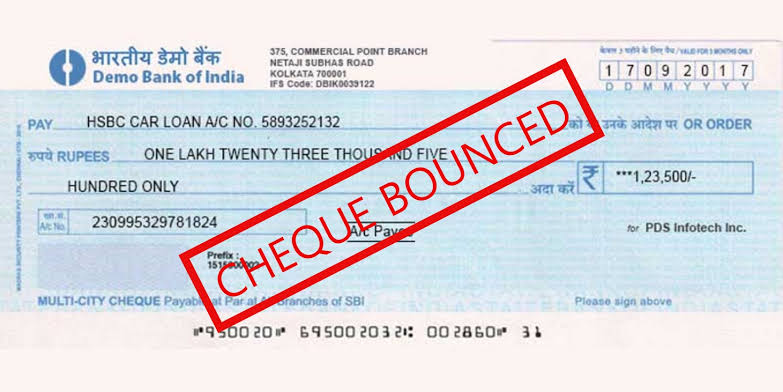
(ii) If the cheque issued by the Drawer in discharge of any debt or other liability is returned unpaid by the Bank to the Payee due to insufficiency of funds or for the reason that the said amount of cheque exceeds the amount arranged to be paid from that account of the Drawer by an agreement with the Bank, then such a circumstance would amount to cheque bounce or dishonor of cheque. However, dishonor of cheque is, by itself, not an offence under Section 138 of the Act. To constitute an offence u/s 138 of the Act, the procedure as hereinbelow mentioned must be strictly complied with. The relevant provisions for the same are contained under Sections 138 to 147 of the Negotiable Instruments Act, 1881.
Procedure for filing cheque bounce case:
When a cheque is returned unpaid/bounced/dishonored by the Bank, the Payee should not wait to receive the said cheque amount according to the convenience of the Drawer. If required steps are not initiated and completed within the prescribed time limit as mentioned in the Act, the chances of recovering the amount would become minimal and would absolve the Drawer from criminal liability.
Followings are the steps and process to be initiated: –
(a) Cheque must be deposited within 3 (three) months from the date mentioned on the Cheque.
(b) If the cheque is returned unpaid/bounced/dishonoured from the Bank, the Payee must collect the dishonoured cheque alongwith the bank slip or return memo from the Bank immediately.
(c) Thereafter, the Payee must send a Legal/Statutory Notice to Drawer of cheque within 30 (thirty) days from the date of receipt of intimation of dishonor of cheque from the Bank through recognised post with acknowledgment, calling upon the Drawer to make payment of the dishonored cheque within 15 (fifteen) days’ time from the receipt of the said Notice. The said Notice must specify all relevant facts and requisite details contained in the Act. If 30 (thirty) days are already elapsed after return of the dishonoured cheque and the said notice is not sent, the Payee may present the cheque with the bank provided the cheque has not become outdated.
(d) (i) If the Drawer of the cheque is an individual, consider sending notice to the right individual at the right address.
(ii) If the Drawer of the cheque is a sole proprietary firm, preferably notice should be sent to the Proprietor as also the Firm at the right addresses.
(iii) If the Drawer of the cheque is a Partnership Firm, notice should be sent to the Partnership Firm as also all the Partners of the Firm at the right addresses.
(iv) If the Drawer of the cheque is a Limited Liability Partnership (LLP), notice should be sent to LLP and its Designated Partners who are engaged in day-to-day management and control of the LLP at the right addresses.
(v) If the Drawer of the cheque is a Private Limited or Public Limited Company, notice should be sent to company as also to its Directors who are engaged in day-to-day management and control of the Company at the right addresses.
(e) If the Payee (holder of the Cheque) sends legal notice for payment of the dishonoured cheque amount against returned cheque and the Drawer does not pay the dishonoured amount within 15 (fifteen) days of receipt of the said Notice and/or refuses to make payment by responding to the said Notice and/or fails to respond to the said Notice, the Payee can file a criminal complaint under Section 138 of Negotiable Instruments Act, 1881 within one month from the date of expiry of the period specified in the said Notice, in the court where the cause of action has taken place.
B. The offence committed under Section 138 of the Act is punishable with imprisonment upto two years or with fine which may extend to twice the amount of the dishonoured cheque or with both.